
Resolve Difficult Matters Privately and Constructively
Not every disagreement needs to become a public battle. Many matters can be addressed through private, good-faith communication between the parties involved.
Private mediation creates space for direct dialogue about rights, responsibilities, agreements, and relationships — with confidentiality and mutual understanding at the center.
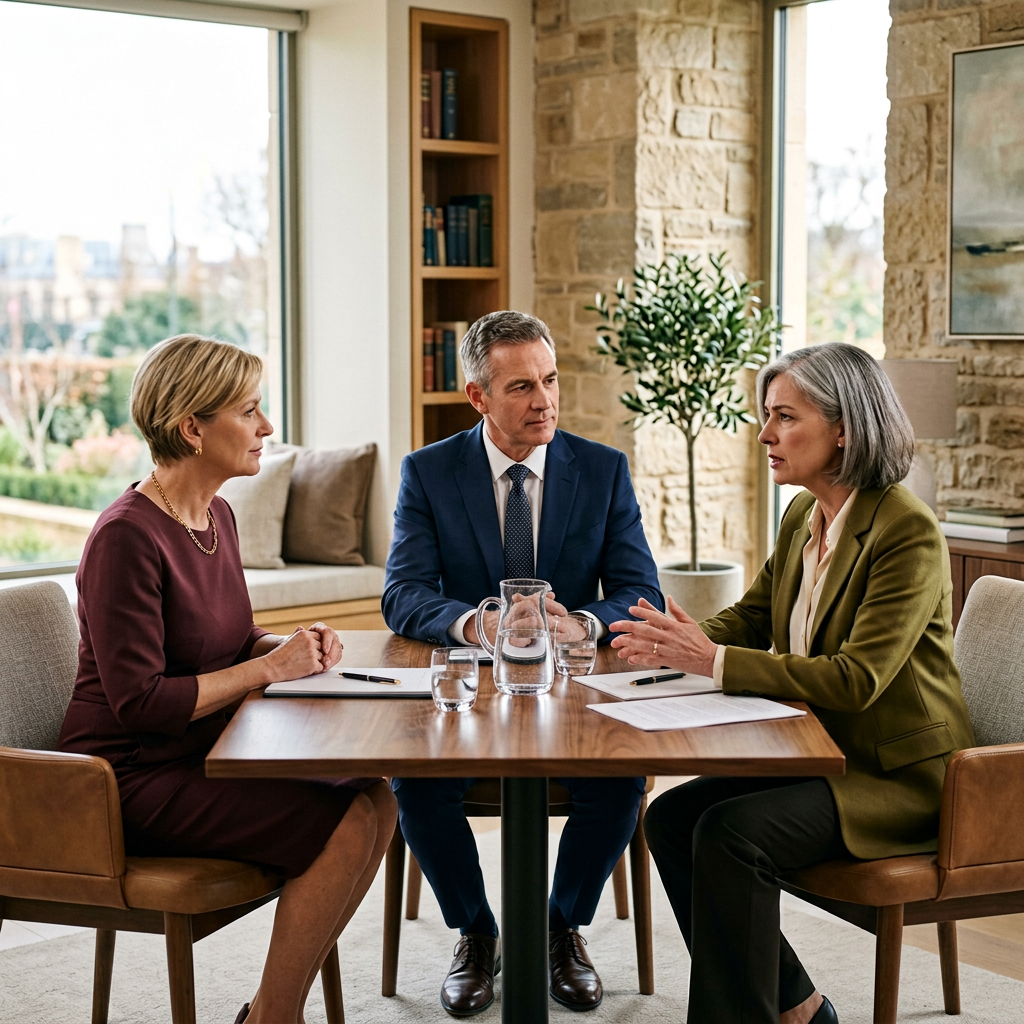
What It Is
A neutral facilitator, not a decision maker.
In private mediation, a neutral mediator facilitates a conversation between the parties. The mediator does not represent either side, does not take a position, and does not impose an outcome.
This is the essential distinction from processes in which a third party hears the matter and hands down a decision that binds the parties whether or not they agree with it.
Here, the parties remain in control. A resolution exists only if both sides arrive at it voluntarily — which is precisely why resolutions reached this way tend to be honored.
When It May Help
Matters people bring to private mediation.
- Family disagreements
- Business partner disputes
- Organizational conflicts
- Contractual disagreements
- Trustee or member disagreements
- Disputes between collaborators
- Sensitive private matters
- Relationship-based disputes
Principles
What the process depends on.
Good Faith
Both parties come to the table willing to hear and be heard, and to deal fairly with one another.
Privacy
The matter stays between the parties. Private resolution keeps private business private.
Direct Communication
People speak to each other rather than through adversarial intermediaries.
Neutrality
The mediator facilitates. They do not represent either side or impose an outcome.
Mutual Understanding
Understanding the other party's position is treated as part of the work, not a concession.
Voluntary Resolution
Any resolution reached is one both parties choose, which is why it tends to hold.
How It Works
From first conversation to agreed next steps.

- 01
Initial Conversation
We begin by understanding the nature of the matter, who is involved, and what each party hopes to resolve.
- 02
Determine Suitability
Mediation depends on willingness. We consider whether the parties are prepared to engage in good faith.
- 03
Prepare the Parties
Each party clarifies their position, their interests, and what a workable resolution might include.
- 04
Private Facilitated Session
A neutral mediator facilitates a private, confidential session focused on direct and constructive dialogue.
- 05
Explore Possible Resolution
The parties work toward an outcome both can accept — an arrangement that serves both rather than one that defeats one.
- 06
Document Agreed Next Steps
Where appropriate, the agreed next steps or terms are recorded so both parties share the same understanding going forward.
Why Private Resolution
What parties gain by resolving matters directly.
Privacy
Public proceedings expose private matters. Mediation keeps the discussion between the parties involved.
Constructive Communication
Conversation, rather than escalation, tends to surface what each party actually needs.
Preserving Relationships
Family, business, and organizational relationships often have to continue after the dispute ends.
Flexibility
Parties can craft arrangements that a rigid, adversarial process would never produce.
Personal Responsibility
Each party takes responsibility for their part, their rights, and their commitments.
Avoiding Adversarial Escalation
Not every disagreement needs to become a public battle. Direct resolution is usually faster and less costly in every sense.
Related Solutions
The Freedom Studio is a private education organization. Private mediation is a voluntary, non-binding process facilitated by a neutral mediator. Information presented here is educational and informational in nature and is not legal advice, and mediation is not a substitute for representation.